Showing posts with label THE CONTEMPORARY FRAMEWORK. Show all posts

Thursday, August 15, 2013

Wild Horses


Glenn Brown, Wild Horses, 2007
In Wild Horses, Glenn Brown distorts Jean Baptiste-Greuze’s Innocence (c.1790), a portrait of a young woman with a cherub-like face, draped in a swath of fabric tenderly cradling a lamb in her arms. Brown transforms the seemingly romantic image of purity and youth into a contemporary representation of the bizarre and the fantastic; the woman’s eyes have no pupils and her flesh morphs into swirling brushstrokes of acid yellow, and the lamb is displayed as vivid red with green eyes. By recontextualizing and mutating the original image, Brown’s masterful technique imbues it with another reading, inviting the viewer to examine the medium, the subject and the notion of beauty.


via http://www.flagartfoundation.org/exhibition/67/description

This link gives you a really close look at Glenn Brown's swirling technique. 
Jean Baptiste Greuze, Innocence, 1970

Wednesday, August 14, 2013

Appropriation and 'Fair Use'

The fair-use defense is built into copyright law to allow creative people to build on others’ work without having to obtain permission.  This defense is complicated because the court is required to consider four separate factors on a case-by-case basis to decide whether a particular use is fair.

Despite the lack of clear instructions on how to compare these factors, courts usually rely most on the first factor (“the purpose and character of the use”) and the fourth factor (“the effect of the use upon the potential market for or value of the copyright”).

The first and fourth factors, and some discussion of how courts evaluate each one, are outlined below:

“The purpose and character of the use.”  Copyright law specifically grants more leeway to nonprofit or educational uses, but even commercial uses can be fair. One of the key questions that artists will usually face is whether their work is transformative.  “Transformative” means more than simply taking another piece of work and casting it in a new medium; it requires using it for a different purpose or to view the original in a different light. Parody has often proven to be a successful fair-use defense, and it requires a critique of the specific, original work – use of the work as a more general satire receives less protection under the fair-use test.

“The effect of the use upon the potential market for or value of the copyrighted work.”  One question that courts ask is whether the consumer audience will substitute the new work for the original. If not, the use may be fair.  Another that courts will ask is whether this sort of copying harms the original artist’s ability to license the work.  Bear in mind that certain kinds of harm to the market for the original can still be fair, like the reduction in sales that may result from a scathing criticism or parody.


Tuesday, August 13, 2013

Glenn Brown: Further research links

To prepare for the Glenn Brown Sac ensure you carefully read all the 4 handouts I have given you.

You must choose 2 artworks to discuss in your written report.


I advise you to use "The Loves of Shepherds". You must choose one other. Make sure you can find some commentaries that relate to the 2nd artwork you choose. Glenn Brown often works in series so many commentaries or ideas can be interlinked.

The Tate Gallery has a good online resource of Brown's paintings via this link.
Serpentine Gallery also has an informative resource about Glenn Brown's art via this link
Van Dyck, Cornelis van der Geest, 1620

Check out some of these other links as well.
Nerdist
Parkett Magazine article
Ludwig catalogue
Dark Star, 2003

You should also consider the copyright law in respect to appropriation
The Art Newspaper
Law on the Web
Appropriation in Contemporary Art
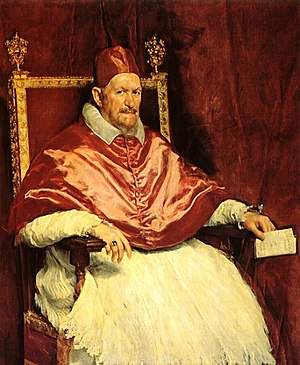
Velazquez, Pope, 1650
Glenn Brown, Sex, 2003

Glenn Brown, Nausea, 2008

Frank Auerbach, Head of J.Y.M., 1
Glenn Brown, The Day the World Turned Auerbach, 1992

Thursday, July 18, 2013

Unit 4 Art - Discussion and Debate

Carefully view and study the presentation via the link below.
This introduces the art issue on "art and originality" we will be discussing and debating over the next month.

It is important to read the commentaries of others to establish your own point of view.
You must explore a range of different opinions about the artist's work and the issue of originality in contemporary art. By referencing the opinions of others you will be asked to establish you own points of view.
For homework divide a page into 2 columns with 'for' and 'against' as the headings.
While reading and viewing the prezi presentation record notes of key differing viewpoints. Ensure you record the details of who wrote the commentaries and where and when they were published or sourced.

Click the LINK below to start your research
http://prezi.com/mjd3ymnuqk2z/?utm_campaign=share&utm_medium=copy&rc=ex0share

Wednesday, August 31, 2011

Do-Ho Suh (Korean) – war, identity


Looking at Some/One

An artist who has explored war through his art is Do-Ho Suh. In his piece "Some/One," constructs a sculpture made up of thousands of dog tags, which are circulated through every soldier in the U.S. and beyond. Observers first identify a fish scaled garment, made from thirty thousand dog tags, which is too resemble a soldiers garment. Suh's sculpture conveys the dehumanization of a soldiers role in society, but how can viewers put his piece into context, and understand it by connecting to their own experiences in order to relate it to their own knowledge and understanding? What do dog tags mean generally in art and to the artist himself? Suh''s interpretation is more than literal.
Before any other research was conducted I could not connect this piece to any of my own experiences. The only knowledge I could connect the piece with was war and a community of soldiers somehow formed into a rope.

An article from the online journal base called "Home in The World: The Art of Do-Ho Suh" was helpful to some questions posed before determining the guiding question. Suh's works have a lot to do with experiencing space and identity. In "Some/One," the sculptures back is turned to entering viewers. Viewers are invited to walk around the piece and soon stand face to face with themselves, when they discover that the garment has an opening that is line with mirrored foil. Like in Suh's other works viewers have to walk over the bridge, across the floor, or under seoul home. They all have double meaning concerning the construct of identity. This identity focuses on the importance of the individual as a single representative of a greater entity, such as a nation. Instead of being viewed as multiple individuals, viewers see the greater body.
In "Some/One," the gallery floor in New York City is covered with a blanket of shiny military dogs tags, bringing to mind, all the shadowed identities. Each single soldier is part of a larger military body, deprived from individual human qualities. A quote by Sollins about dehumanization of soldiers in Suh's work is present in how the dog tags used,

"swell to form a hollow, ghost like suit of armor at the center of the room. Whether addressing the dynamic of personal space verses public space, or exploring the fine line between strength in numbers and homogeneity, Do-Ho Suh's sculptures continually question the identity of the individual in todays increasingly transnational, global society," (Sollins).
The piece draws attention in a way which viewers are welcome to occupy and inhabit the space. As they walk over the piece and face the front of it they are able to see the inside of the piece, which has mirrors embodied inside the stainless steal garment. That moment is symbolic because the viewer is experiencing the piece physically by stepping on the dogs tags, and also when they see their reflection inside the front of the garment.
Text from: http://colouryourspirit.hubpages.com/hub/Do-Ho-Suh-A-look-into-his-piece-SomeOne

Sunday, July 31, 2011

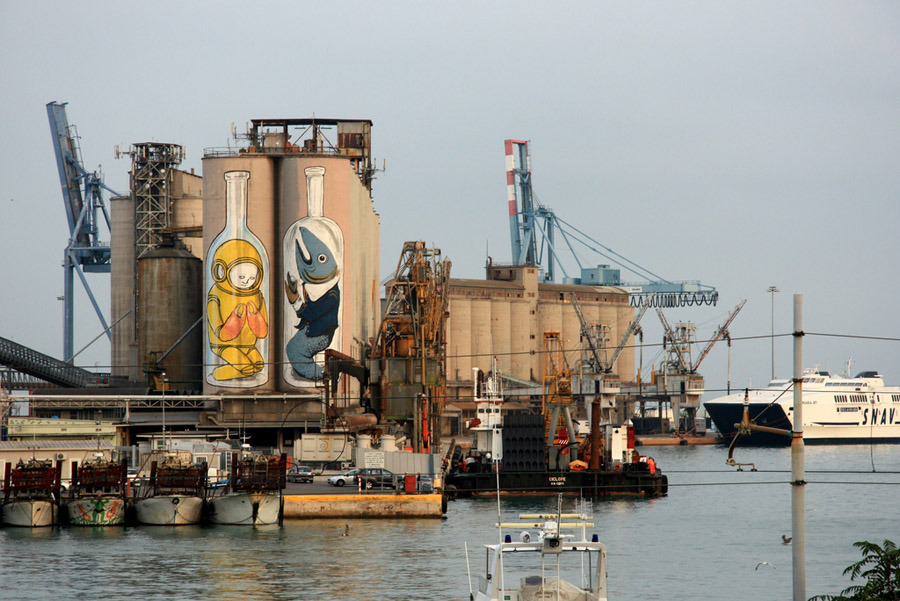
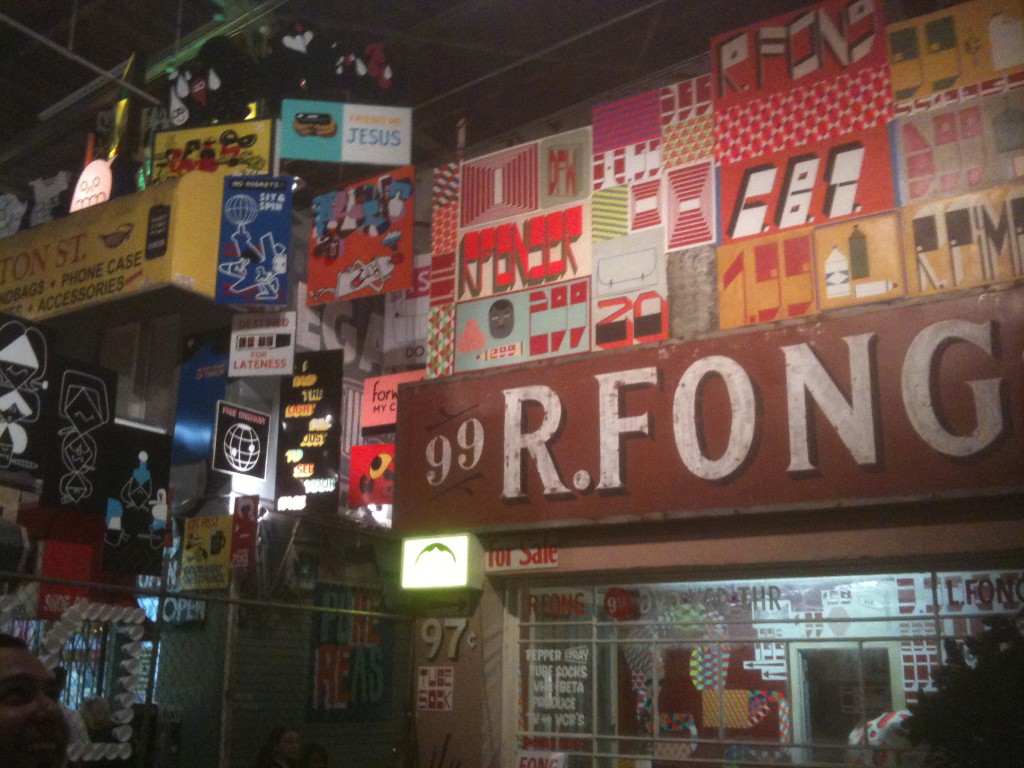
Possible Street Artists to research for your debate

In your discussion and debate you must reference at least one artist (2 artworks by that artist).
Possible artists and places to start searching for commentaries are:

Tate exhibition of street art (2008)

Face 2 Face Palestine project
TEDS award
Women Project
Inside OUT Project, Centre Pompidou


Banksy
Art in the streets, MOCA (2011)
Gaza wall (Palestine) 2005

Metro Gallery (2011)
Art in the streets, MOCA (2011)

Street Market Exhibition 2011 in “Art in the Streets”
“The stars were aligned”, Metro Meat Market, Melbourne (2004)

Art in the streets (2011)
Vertigem (2010)
Tate “Street Art show (2008)


Gaia
Irvine contemporary (2010)
Street work (2011-2007)


Keith Haring

Faile

Obey – Shepard Fairey

Wednesday, March 2, 2011

CONTEMPORARY ART AND GENDER

Cindy Sherman Untitled #112 1982

Many artists respond to the feminist movement of the 1970s, by creating artworks that question stereotypes and traditional gender roles that pervade the media. They challenge ideas of equality in a public forum based on personal experiences.

The act of role-playing is central to the highly successful series Untitled Film Stills made by Cindy Sherman during the late 1970s and very early 1980s. These still images investigate the stereotype of women in film, television and magazines, though they have no basis in any actual film.

Cindy Sherman questions reality in her staged photographs. Her photographs are neither portraits nor self portraits. While the viewer understands that Cindy Sherman acts as both model and photographer in Untitled #112 1982, the character depicted is neither about Sherman or any real character Sherman saw.  Rather, she is role-playing. Her figures are fictional, based on B-movie characters; Sherman transforms herself to become these characters.

The images often question the stereotypes of women in the media. The blond bombshell, the reserved tomboy, the femme fatale…The viewer engages with the image asking, who is this person?  Why is she depicted in this way? Where have I seen such a figure? Are they real? They reveal more about ourselves; our shortcomings, our inability to look beyond a façade, or our preoccupation with perceptions of beauty and identity. They question society’s overall reliance on the media to define our lives and our place in the world.  

Cindy Sherman purposefully plays with the stereotypes of women and also men to confront her audience with the ways we see and interact with images. The media is an important reference point for Sherman as her characters are often caricatured perceptions that are fed by the media.

Fredric Jameson is a post modern theorist, who observed:
…the face becoming an impenetrable façade revealing nothing of the self and the skin becomes a plastic wrapping.
Post modernism now, Sherman’s Meditation of Subjectivity by Claire Todd-Miller, 30th October 2006, page 3

Text from
http://www.ngv.vic.gov.au/guggenheim/education/09.html

Monday, February 28, 2011

THE CONTEMPORARY FRAMEWORK


 The Contemporary Framework is used to examine an artwork, irrespective of when it was created, in the context of contemporary art ideas and issues. Contemporary art ideas and issues are those originating in the late twentieth century (1970’s) onwards.

With a focus on current ideas and issues, students should consider the following questions:

• How have contemporary art ideas and issues challenged traditional understandings of artworks and their significance?

Traditional views on art are always being challenged by contemporary artists.

Traditional views of art include the following perspectives:


Contemporary views about art include the following: (They challange the traditional)

An artwork is judged either as “aesthetically pleasing” or “good or bad”.

This view is challenged by artists who make art that is visually challenging, even shocking. Often artworks that confront us are more interesting and play a role in transforming our understanding of art and the world around us.


The artist is a genius who makes a work of art that the viewer is a spectator to. Art is only something that a gifted individual can create.

This view is challenged by the idea that the viewer or audience can play an important role in helping to create a work of art. Many artworks are now interactive which involves audience participation.

Artworks have multiple meanings.


Traditional views of art places a separation between ordinary life and art e.g. illustrated by the distance placed between high art and popular culture
High art is the honoured forms of painting and sculpture in galleries.
Low art is considered to be lesser then these forms. Craft, pop culture, graffiti, photography and the media are all low art-forms. 

Contemporary art fuses together high and low art-forms in order to erase the distance between ordinary life and art.

Contemporary artists embrace technology, the internet, pop culture and everyday objects in the making of art.

Contemporary art also uses irony and humour to challenge the seriousness of art. Parody is a practice that involves imitating the style of a work for comic effect or in ridicule.


An artwork must be original in order to be regarded as “art”.


Contemporary art ideas recognise the influence of and borrowing of past artworks and existing images from the media.

Artists recycle ideas and artworks from the past and present in order to challenge their views they contain within a new context.

The Postmodern practice of Appropriation and Pastiche (borrowing from artworks)  challanges traditional ideas of originality in art.


• How does the choice or presentation of subject matter or medium, materials and techniques reflect or challenge artistic or social traditions?

The materials and techniques and the presentation of a contemporary artwork are often strongly connected to its meaning. Artists will often use materials that are the fabric of their society and present their work in such a way that it challenges the culture that this material represents.
An EXAMPLE of this is:
Jenny Holzer

Subodh Gupta


• What is the impact of dynamic media applications and other emerging art forms on the viewer such as video, digital, projection, installation, interactive, street art, sound and performance art?
How do these art forms differ from traditional ideas of viewing and experiencing object-based art in museums and galleries?

Dynamic media applications and other emerging art forms are embraced by contemporary artists as a way of challenging traditional views of viewing and experiencing object-based art in museums and galleries. Technology is redefining the way artists can engage their audience where sound, projections and digital programming allow a more immersive experience for the viewer then a singular painting or sculpture.

Art can be a fleeting event such as a happening, performance or a site-specific artwork that is impermanent such as environmental art or street art. These forms embrace the process of making art and sharing ideas rather than the actual end-product that becomes a commoditised object that is only seen in a gallery.

See Christo and Jean-Claude
GO TO THE REVIEW SECTION

See ACMI Video art

See GOMA Contemporary art

Carsten Holler

GOMA CONTEMPOARY SHOW & BLOGSPOT


• How might artworks of the past take on new or different meanings, in the context of contemporary ideas and issues?

Past artworks can be viewed critically in light of contemporary ideas and issues that offer new understandings of class, racial, sexual and cultural discrimination that has occurred through-out history.
You may also ask how have artworks of the past challenged artistic traditions of their time?


These are part of the Making sense of Modern Art interactive